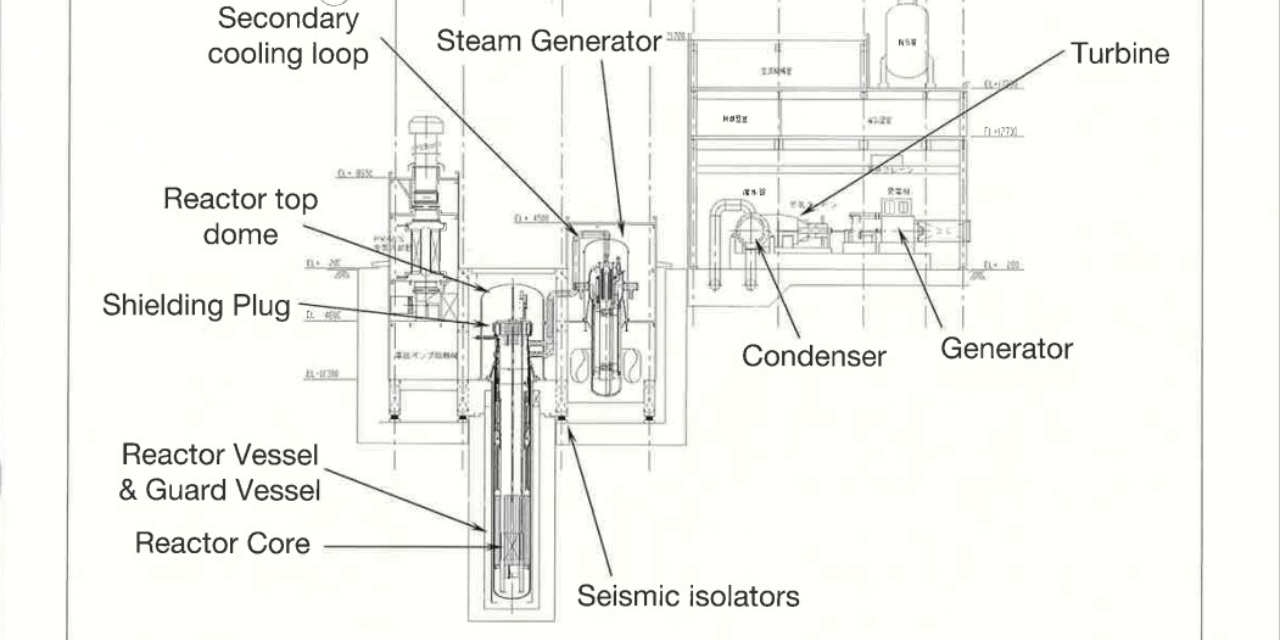
A diagram of Toshiba’s 4S sodium-cooled reactor, as published in Nuclear News in 2005. (Source: NN, Aug. 2005, p. 51)
Today, commercial microreactors are common in the marketplace of nuclear ideas. Dozens of companies are vying for their designs to reach scaled deployment to meet surging energy demand.
However, the term “microreactor” didn’t appear in Nuclear News until 2019, when the Department of Defense popularized it (in a nuclear context) in the early days of what would become Project Pele. Even before then, however, all the way back in 2005, Toshiba was developing the 4S (Super-Safe, Small, and Simple), a 30-MWt, pool-type reactor designed for remote locations with small grids. Once sealed and delivered, the reactor would run for 30 years with no refueling. If the word “microreactor” had been in use then, the 4S would certainly have been categorized as such.
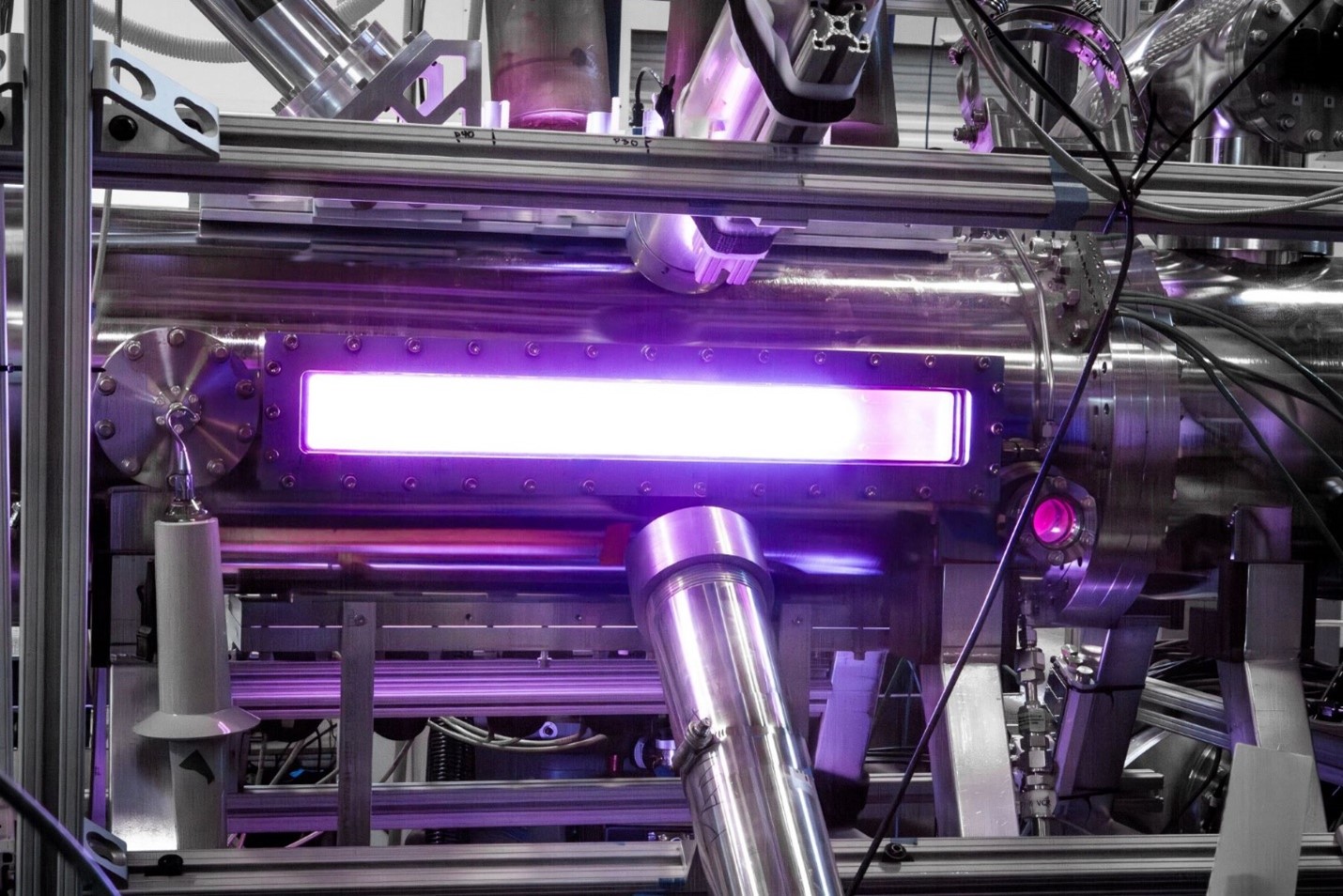
A bright flash of light from a FuZE (Fusion Z-pinch Experiment) plasma. (Photo: Zap Energy)
Zap Energy announced April 23 that it has reached 1-3 keV plasma electron temperatures—roughly the equivalent of 11 to 37 million degrees Celsius—using its sheared-flow-stabilized Z-pinch approach to fusion. Reaching temperatures above that of the sun’s core (which is 10 million degrees Celsius temperature) is just one hurdle required before any fusion confinement concept can realistically pursue net gain and fusion energy.
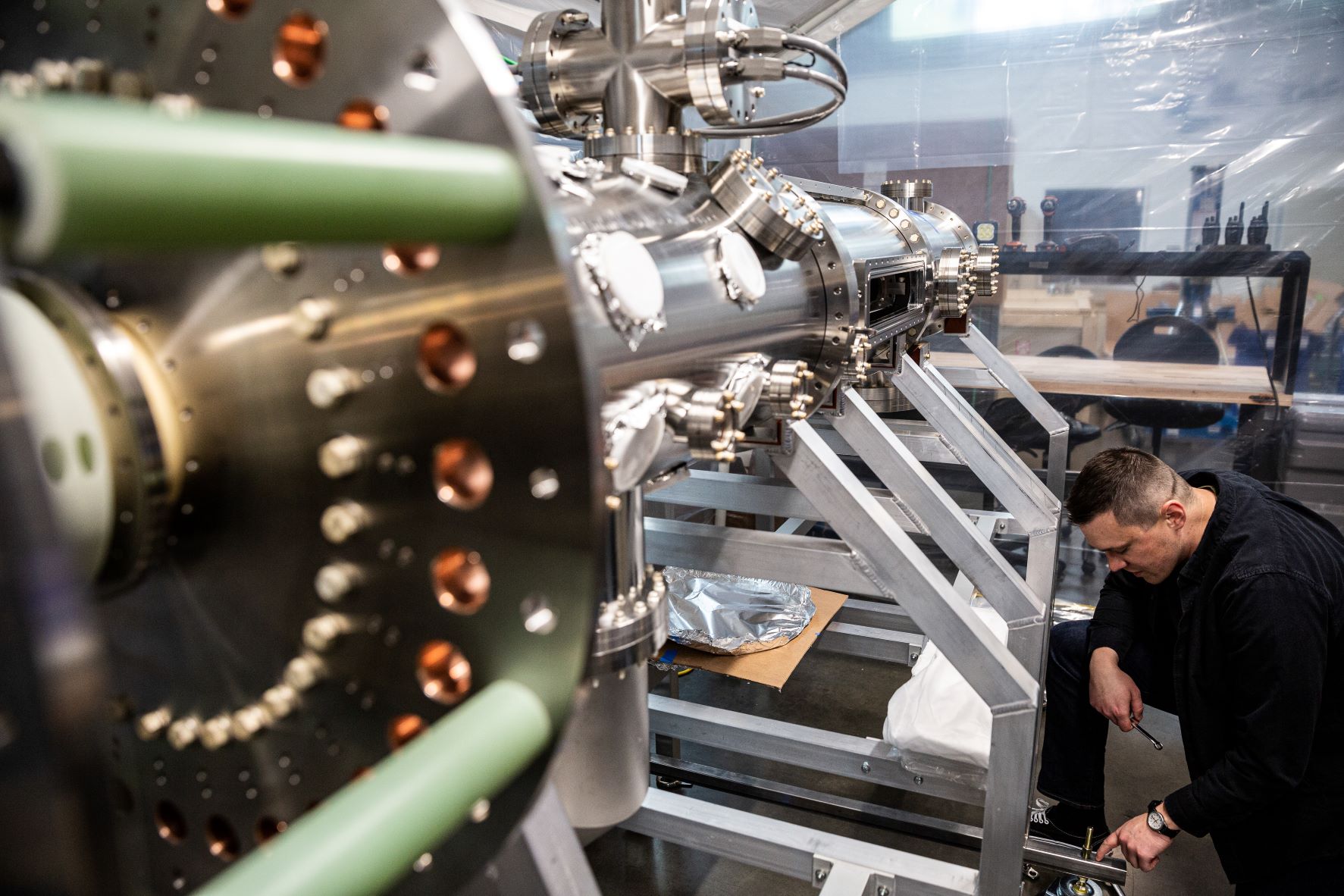
The first plasmas created in FuZE-Q, shown here during assembly, represent a key step towards fusion experiments with net energy output. (Photo: Zap Energy)
Zap Energy has created the first plasmas in its FuZE-Q machine—the company’s fourth prototype machine and the one it hopes will demonstrate a net energy gain from a Z-pinch fusion plasma just one millimeter in diameter and half a meter long. Zap Energy announced that engineering achievement and the close of $160 million in Series C funding in late June.